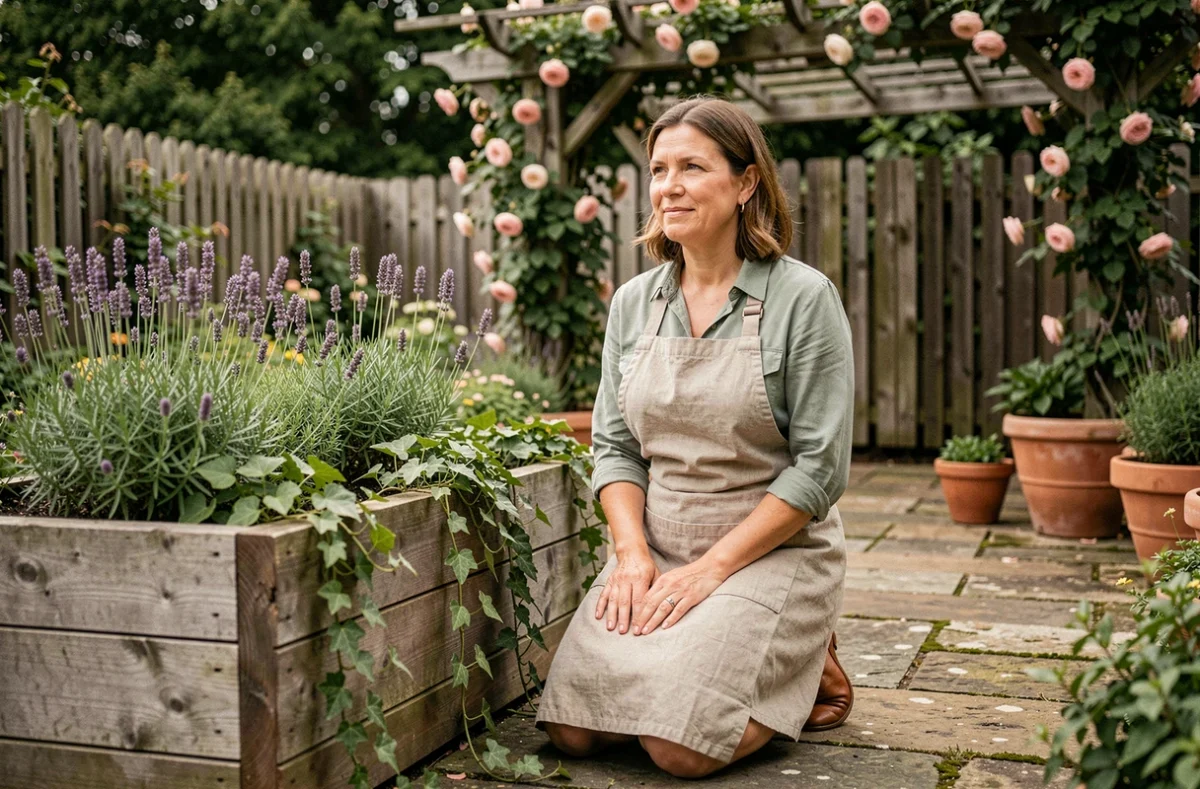
A plot facing due south, clay soil that cracks in August, a lawn that turns yellow by mid-July: this is the real starting point when you want to transform your garden into a peaceful haven. Before thinking about furniture or decoration, the question that conditions everything else concerns the garden’s ability to survive without permanent watering, even during summer water restrictions.
Soil and exposure: the diagnosis before any garden layout
You don’t plant the same vegetation in well-draining sandy soil as you do in compact clay that retains water in winter and then cracks in summer. The first instinct is to observe the ground after heavy rain: if water stands for more than an hour, drainage needs to be improved before any planting.
Exposure then determines the plant palette. A bed oriented due south requires plants capable of withstanding several weeks without rain. A shaded corner to the north allows for ferns or hostas but excludes lavender. Grouping plants according to their water needs and exposure avoids wasting watering on poorly positioned vegetation.
To find accessories, furniture, and decorative elements suitable for each garden configuration, one can turn to specialists like https://www.atmospheredujardin.com who offer solutions designed for outdoor layout.
Drought-resistant plants: a beautiful garden even without watering
The idea of a “no watering” garden is appealing, but it requires patience. Plants known for being drought-resistant (lavender, rosemary, sedums, salvias, verbenas) need regular watering during their first two years, while their roots establish themselves deeply. A water-efficient garden is built over two to three seasons, not in a weekend.
The most reliable method is to start with a test area. Improve drainage if necessary, plant, water generously but spaced out, then gradually reduce inputs. If the test area survives a full summer, expand the palette to the rest of the garden.
Reduce the lawn without eliminating it
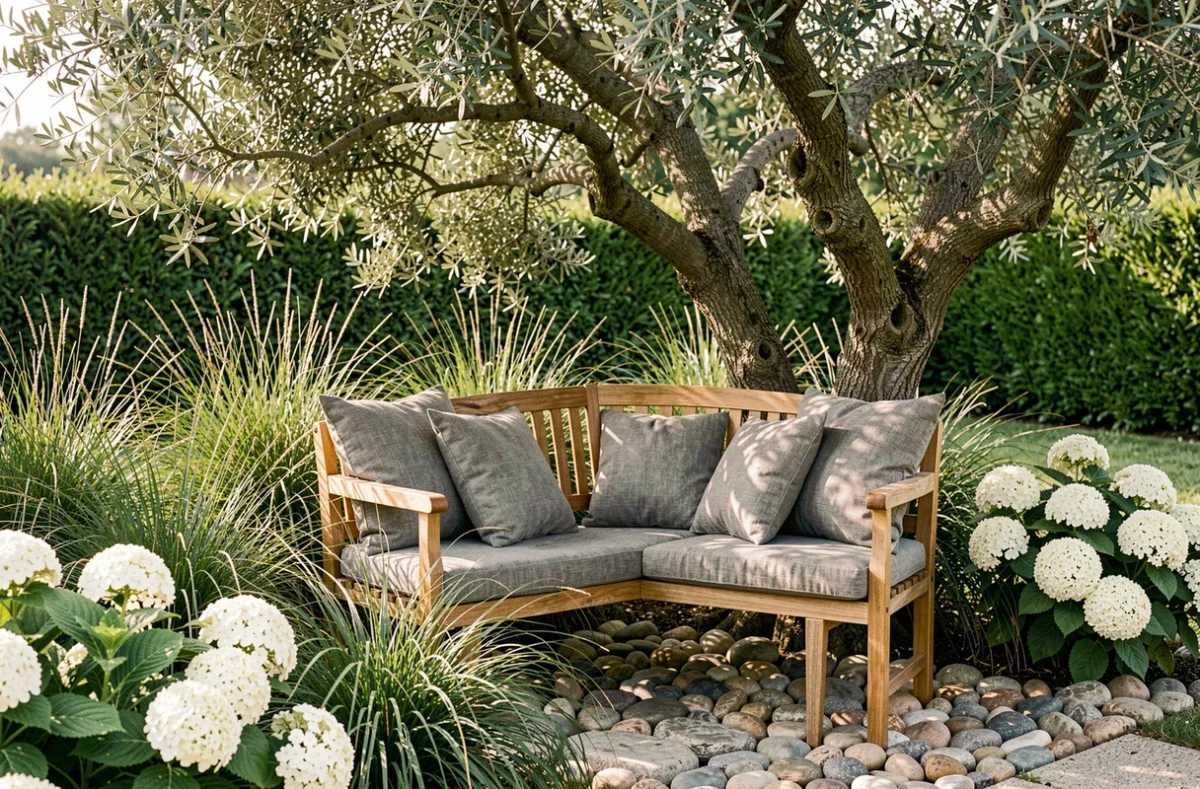
The traditional lawn remains the most water-consuming part of a garden. Opinions vary on this point, but the current trend recommends reducing grassy areas rather than eliminating them. Keep a strip of grass for circulation or children’s play, and replace the rest with ground covers, ornamental grasses, or mulched flower beds.
Mulching plays a key role: a thick enough layer limits evaporation, reduces weeding, and nourishes the soil as it decomposes. Pine bark, flax shavings, branch mulch: the choice depends on the desired style and soil pH.
Outdoor lighting: creating an ambiance without polluting the night sky
Lighting radically transforms the atmosphere of a garden in the evening, but poorly designed lighting poses two concrete problems. The first is light pollution, regulated by French law, which imposes obligations on individuals and communities regarding the orientation and power of outdoor lighting fixtures. The second is unnecessary electricity consumption.
- Direct each light fixture downward, never toward the sky or neighboring hedges, to limit stray diffusion and comply with current regulations.
- Favor low-intensity solar lights along pathways, sufficient to mark a route without turning the garden into a sports field.
- Use warm white LED string lights on the terrace or pergola for a relaxing ambiance, turning them off before midnight to reduce impact on nocturnal wildlife.
- Install a motion detector on security lighting instead of a permanently lit floodlight.
Well-directed downward lighting creates more atmosphere than a powerful floodlight. Deliberate shadow areas contribute as much to the ambiance as to the preservation of nocturnal pollinating insects.
Furniture and relaxation area: choose materials that age well
Garden furniture endures UV rays, rain, and frost. A cheap woven resin lounge deforms in two seasons. A set made of untreated acacia grays but remains sturdy for years. The choice of materials determines the lifespan of the relaxation area as much as its aesthetics.
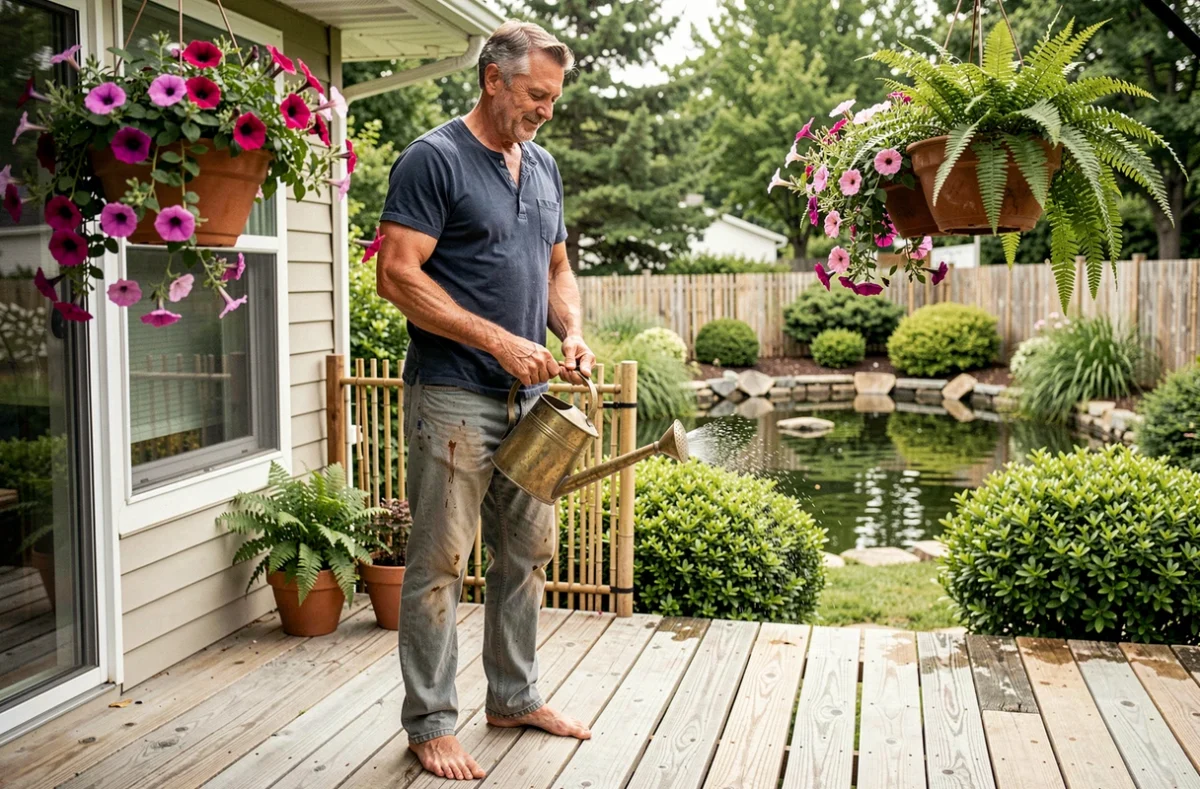
Here are some guidelines for decision-making:
- Aluminum resists corrosion and remains lightweight, ideal for terraces where furniture is often moved.
- Wood (acacia, teak, treated pine) requires annual maintenance but provides a visual warmth that is hard to replicate with metal.
- Reconstituted stone or polished concrete is suitable for fixed elements like built-in benches or low walls, which structure the space without partitioning it.
The relaxation area benefits from being protected from prevailing winds. A plant screen (tall grasses, non-invasive bamboo) or a shade sail stretched between two posts is often enough to create a sheltered space without building a wall.
Accessories and decoration: the detail that changes the ambiance
Once the structure is in place, it is the objects that personalize it. A wind chime, a birdbath, terracotta pots grouped in threes: outdoor decoration works through measured accumulation, not saturation. Three well-placed elements are worth more than ten scattered randomly.
Outdoor textiles (water-repellent cushions, outdoor rugs) provide immediate comfort on a terrace. They should be brought inside during prolonged rain or made from solution-dyed fabrics whose mass-dyed fibers resist UV better.
A garden that functions as a true living space relies on well-understood soil, plants suited to the local climate, understated lighting, and furniture chosen to last. Summer water restrictions make these decisions increasingly concrete: it is better to have a layout designed to withstand dry summers than a decor that collapses at the first heatwave.