
A blocked door does not fall under the same protocol depending on whether a child is locked inside alone or a stuck cylinder simply prevents you from getting home after work. Confusing the two situations costs time, money, and sometimes unnecessarily mobilizes emergency resources. Here we detail the technical and regulatory criteria that determine the right contact person.
Life-threatening risk behind the door: the only criterion that justifies calling 18 or 112
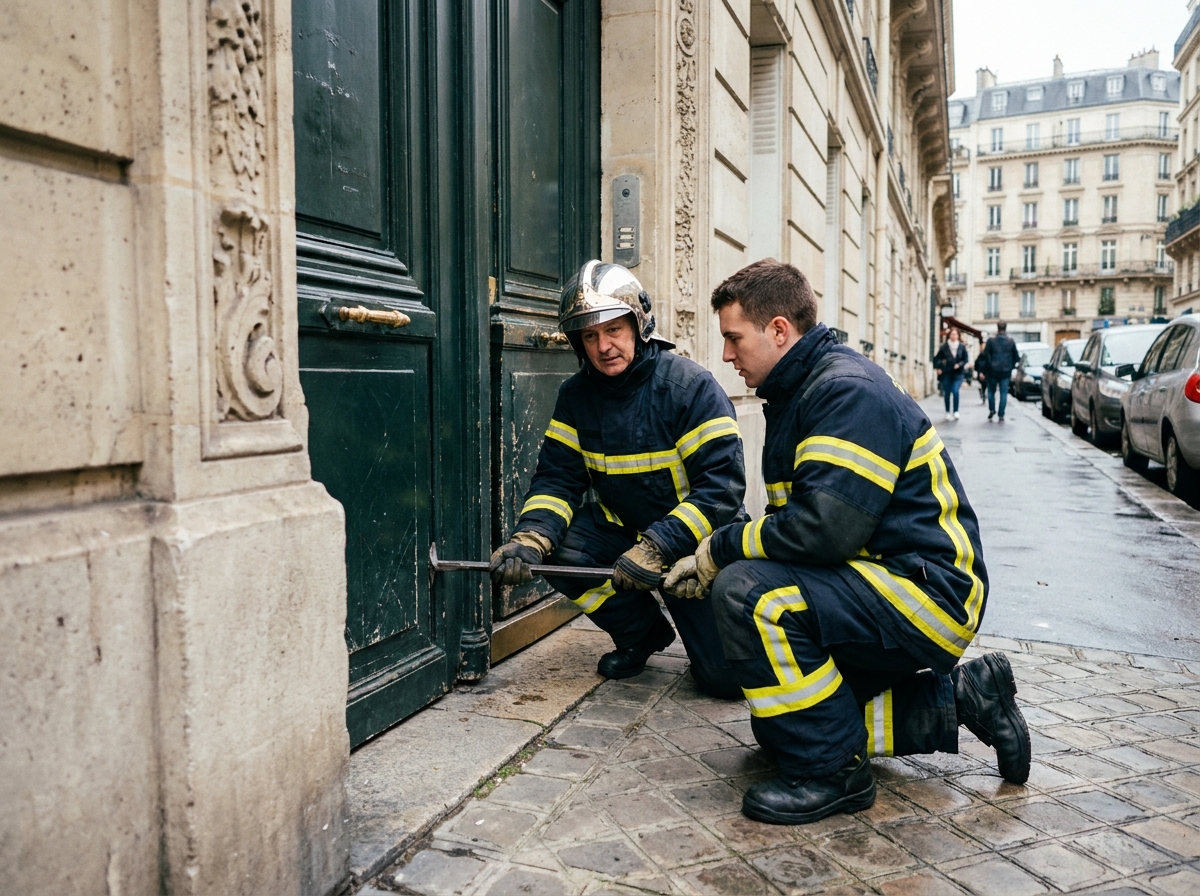
The activation of the firefighters is based on a precise notion: the presumed presence of a person in distress behind the door. A young child left alone, an elderly person who is unresponsive, a smell of smoke or gas, a medical emergency reported by phone before losing contact. In these cases, the intervention falls under rescue, not troubleshooting.
The firefighters have rapid forcible entry tools (halligan bar, hydraulic spreaders) calibrated for quick access. The downside is known: the door, frame, and lock are often destroyed. This is not a flaw in the method; it is a deliberate trade-off between the integrity of the home and life-threatening urgency.
Calling 18 for a simple door that has been closed without immediate danger clogs emergency lines. Alert processing centers frequently redirect this type of call to a locksmith. We recommend asking three questions before picking up the phone:
- Is someone locked inside and unable to get to safety (child, person with reduced mobility, animal in distress due to high heat)?
- Is there a risk of fire, gas leak, or flooding occurring behind the door?
- Could the situation deteriorate in the minutes that follow if no one intervenes?
If the answer is no to all three, the locksmith is the appropriate contact. The payment methods offered by these professionals in emergency situations are detailed in this article, a point to check before calling to avoid unpleasant surprises once on site.
Door closed without a key: fine opening or forced cylinder
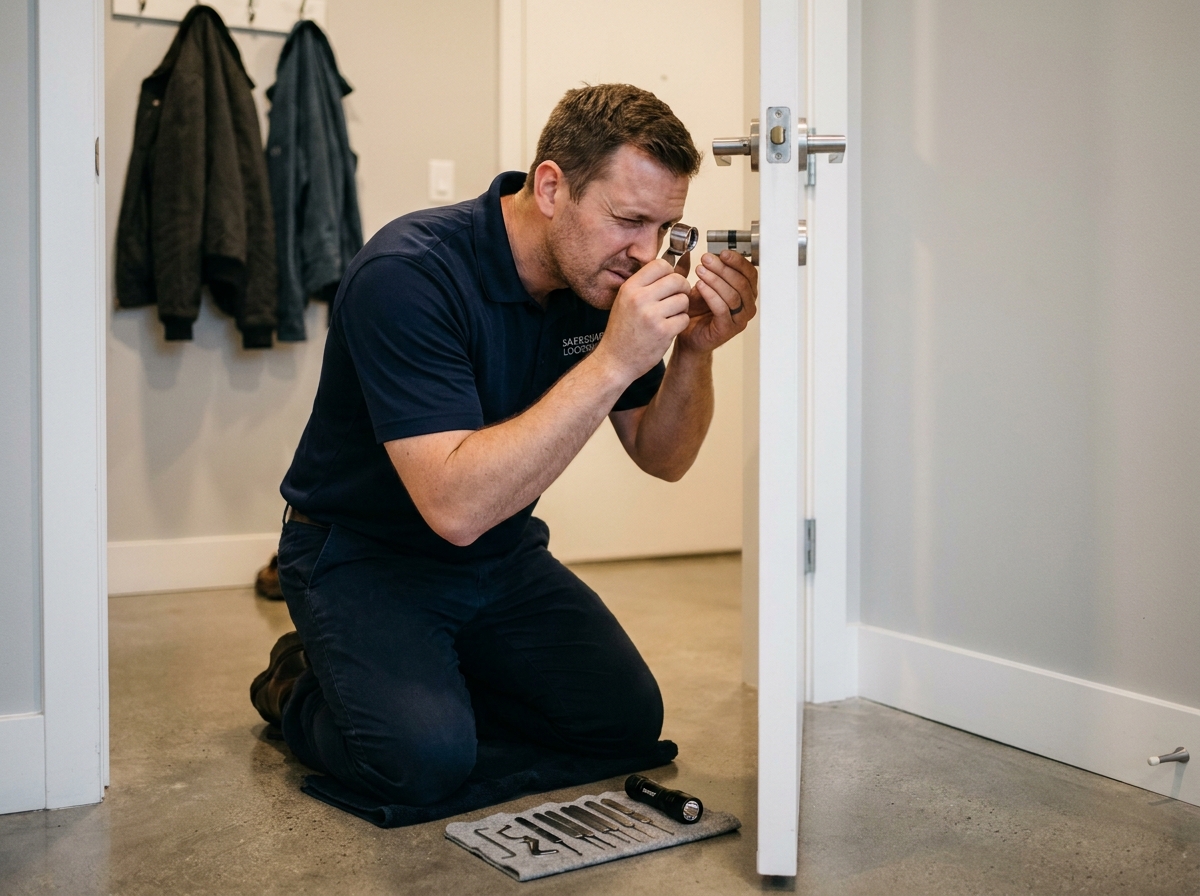
A door closed with the latch engaged remains the most common and least technically serious situation. On a non-key-locked single-action lock, a qualified locksmith uses fine opening techniques (by-pass, celluloid sheet on the latch, picking the cylinder) that preserve the integrity of the mechanism.
The difficulty increases on a reinforced door with a locked multi-point lock. If the top and bottom points are engaged (door pulled hard or automatic lock), the by-pass no longer works. The locksmith then moves on to decoding the cylinder or, as a last resort, drilling. The cylinder is destroyed, but the lock block and door remain intact.
The distinction is crucial for cost: a fine opening without part replacement is significantly cheaper than an intervention involving drilling and the installation of a new cylinder. We observe that many inflated quotes are precisely based on the announcement of systematic drilling, even when the configuration allowed for a non-destructive opening.
Credit card and assistance: an underutilized reflex
Some high-end credit cards include a home assistance guarantee covering the intervention of a locksmith in case of a closed door or lost keys. Checking the guarantees of your card before calling can sometimes lead to total or partial coverage, with a network of locksmiths approved by the insurer. This reflex is rarely mentioned in troubleshooting-oriented content, but it can save the entire bill.
Preliminary quote from the emergency locksmith: what the regulations require
The regulatory framework requires any professional to provide written information on services and their prices before the intervention. This obligation applies even in emergency situations. The quote must separately detail the travel fee, labor, the type of opening performed, any replacement of the cylinder or lock, and hourly surcharges (night, weekend, holiday).
A locksmith who refuses to detail these items over the phone or who announces a global price without breakdown is a warning sign. Similarly, an abnormally low price at the call, followed by a multiplied invoice once on site, constitutes an abusive practice documented by consumer associations.
Points to check before validating an emergency quote:
- Is the travel fee charged separately or included in the announced flat rate?
- Does the quote specify the proposed opening method (fine, drilling, replacement)?
- Are the hourly surcharges explicitly quantified and consistent with industry practices?
- Does the professional provide a verifiable SIRET number and professional liability insurance?
Stuck lock with the key inside: an intermediate case often poorly managed
The key left in the cylinder on the inside prevents the insertion of a second key on the outside on most standard cylinders. This blockage, common on non-declutchable cylinders, does not constitute a life-threatening emergency but makes fine opening more complex.
A declutchable cylinder allows opening even if a key is engaged on the other side. On recent reinforced doors equipped with this type of cylinder (common on A2P certifications), the problem does not arise. On a standard non-declutchable cylinder, the locksmith generally has to drill to access the mechanism, which implies a replacement of the cylinder.
This case illustrates the boundary between firefighters and locksmiths: as long as no vulnerable person is in danger inside, forcible entry by emergency services provides no advantage. The locksmith works with precision that limits damage to just the cylinder, whereas emergency forcible entry often damages the door frame and requires carpentry repairs in addition to locksmithing.
The choice between firefighters and locksmiths thus boils down to a simple yet rigorous evaluation. Immediate danger to a person: call 18. Mechanical problem without life risk: contact a locksmith after checking their quote, references, and any guarantees from your credit card or home insurance. This distinction prevents the unnecessary mobilization of emergency resources and protects the individual’s budget.