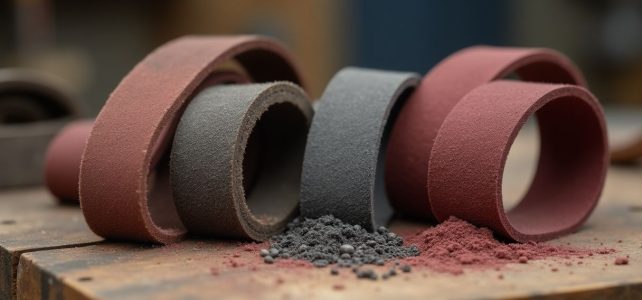
The abrasive belt is a tool whose importance is often underestimated in the field of manufacturing and DIY. However, its contribution is essential for achieving flawless finishes on various materials. Whether for woodworking, metalworking, or other materials, it proves to be a valuable ally for craftsmen, professionals, and even informed amateurs. The abrasive belt, with its simple design, allows for great efficiency and precision in sanding, polishing, and finishing surfaces. The diversity of grains and materials used in its manufacture makes it a versatile tool, suitable for specific applications. The enthusiasm for this universal tool lies in its ability to transform a raw surface into a smooth and aesthetically pleasing finished product.
Its popularity is also explained by the ease with which it can be integrated into different machines such as belt sanders, portable machines, or industrial systems, adding a dimension of comfort and speed to the work process.
The components and types of abrasive belts
Abrasive belts come in several types, each designed for specific applications, making their selection crucial for effective work.
- Abrasive grain: The choice of grain is fundamental. It determines the fineness or roughness of the belt. The grains are generally made of materials such as aluminum oxide, silicon carbide, and zirconium, each having its own characteristics in terms of durability and effectiveness.
- Backing: The backing of the abrasive belt is equally determining. It can be made of paper, fabric, or synthetic material. Each type of backing has its own advantages, offering different levels of flexibility and tear resistance.
- Adhesive: The adhesive used to attach the grain to the backing is also a key element. Its quality affects the durability of the belt and safety during its use, especially during intense work.
The practical applications of the abrasive belt
Abrasive belts find their applications in a multitude of sectors, ranging from simple household use to heavy industries.
In the woodworking sector, abrasive belts are used to smooth surfaces, remove old finishes, and prepare the surface for a new treatment.
For metal, they are essential for deoxidizing, preparing welds, or giving a polished finish to metal parts. The automotive and aerospace industries also use these belts to perfect essential parts, ensuring their quality and reliability.
Each application requires a specific belt, optimized according to the material being worked on and the desired result. This tool proves to be remarkably versatile, capable of meeting the most varied demands.
Choosing the right abrasive belt
Choosing the appropriate abrasive belt is a decisive step in ensuring effective and quality work.
- Define the material to be worked on: wood, metal, plastic, etc.
- Select the appropriate grain: the higher the grain number, the finer the finish will be.
- Consider the size of the belt and the machine used to avoid technical incompatibilities.
- Evaluate the durability and resistance of the belt for intensive use.
Maintenance and replacement of the abrasive belt
A prolonged and effective use of the abrasive belt requires regular maintenance and timely replacement. Ignoring these aspects can compromise not only the quality of the work but also the safety of the user.
To extend the lifespan of an abrasive belt, it is advisable to regularly clean the abrasive surface to prevent the accumulation of residues, which can reduce its effectiveness.
When a belt shows signs of wear, such as cuts or a noticeable decrease in its abrasive capacity, it is time to replace it. Regular changes ensure not only optimal performance but also the protection of the machine and the user.