10 cl of milk do not weigh 100 g. The density of whole milk is around 1.03 g/ml, which places 10 cl of whole milk at approximately 103 g on a scale. This difference may seem marginal on a pancake, but it is enough to alter the texture of a pastry cream or a flan. Starting with the correct figure avoids blind adjustments during preparation.
Density of milk and conversion from cl to grams: the rounding trap
The relationship between centiliters and milliliters is fixed: 1 cl equals 10 ml, so 10 cl corresponds to 100 ml. There is no ambiguity on this point. The problem begins when converting milliliters to grams.
For pure water, 100 ml gives 100 g. Milk is not water. It contains suspended fats, proteins, and lactose, which slightly increases its density. Whole milk has a density close to 1.03, semi-skimmed milk is a bit lower, and skimmed milk is closer to water.
In practice, we recommend remembering 103 g for 10 cl of whole milk. In a recipe that calls for 50 cl, the difference rises to about fifteen grams, enough to change the liquid/flour ratio in a choux pastry or a thick béchamel. If the recipe indicates a weight, do not blindly convert using the water ratio.
To measure 10 cl of milk in cooking reliably, a measuring cup remains the most direct tool, provided you read the measurement at eye level, with the meniscus at the line.
Measuring 10 cl of milk without a measuring cup: practical methods
The absence of a graduated cup does not require improvisation. Several household references provide acceptable precision for most recipes.
Standard tablespoons
A standard tablespoon holds about 1.5 cl of liquid. Therefore, you need between six and seven level tablespoons to reach 10 cl. The margin of error remains low for savory preparations. In fine pastry (ganache, crème brûlée mixture), this method lacks precision.
Coffee cup and proportionality
A classic coffee cup (espresso type) holds between 8 and 10 cl depending on the model. Rather than guessing, a more reliable approach is to use a proportional reasoning:
- Fill the cup with level water, then pour it into a known container (a 50 cl bottle, for example) to deduce its exact capacity.
- Adjust the filling accordingly: if the cup holds 12 cl, filling it to four-fifths gives approximately 10 cl.
- Mark this visual level with an erasable marker for future use.
This technique, derived from physics-chemistry protocols, goes beyond the simple “one cup = so many cl” found everywhere. It transforms any container into a reliable measuring tool.
Kitchen scale
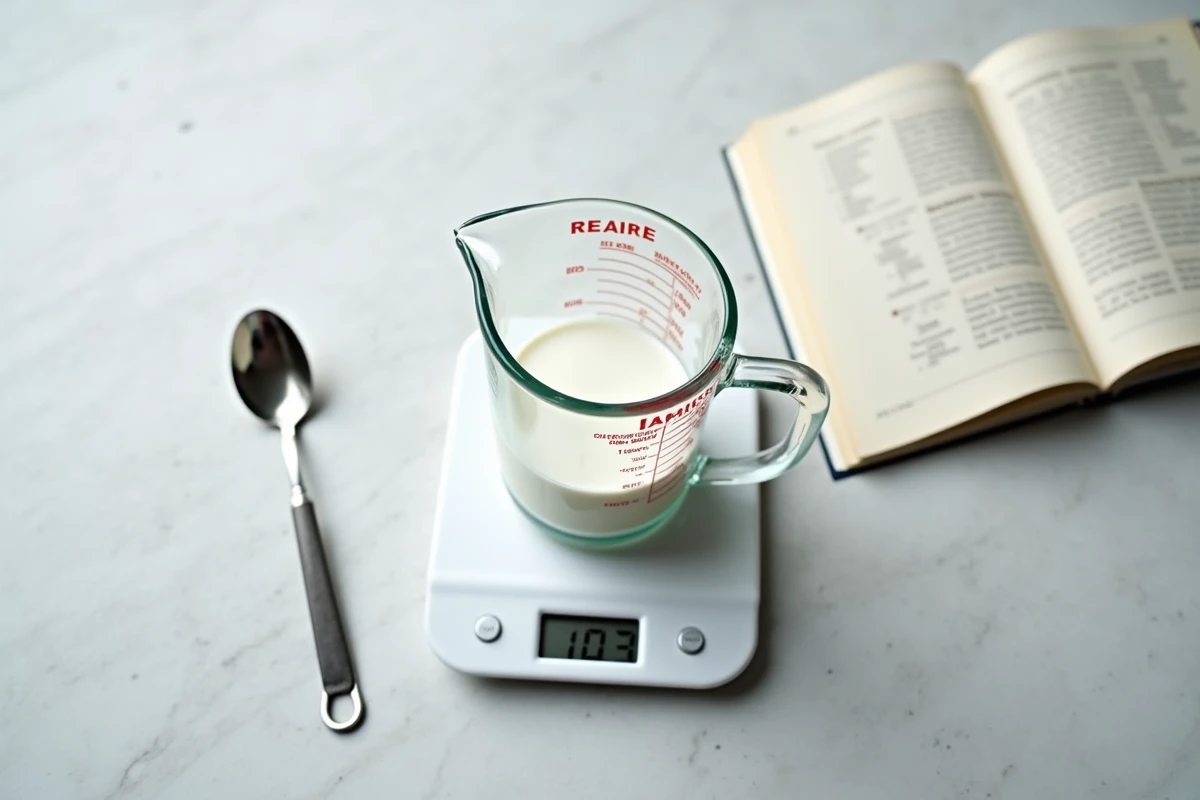
Weighing the milk remains the most precise method, provided you apply the correct conversion factor. Tare a container, pour in the milk until you read 103 g, and you obtain your 10 cl of whole milk without approximation. On a scale accurate to the gram, the error becomes negligible.
When measurement precision truly affects the outcome of a recipe
Not all recipes react the same way to a difference of a few milliliters. It is useful to distinguish between two categories.
Tolerant preparations (soups, stews, thick pancake batters) absorb a difference of 5 to 10 ml without issue. A measuring cup is sufficient, and even the tablespoon method works.
Sensitive preparations require a measurement accurate to the gram. This is the case for flan mixtures, whipped ganaches, hydrated yeast doughs, and most pastry recipes where the liquid/dry matter ratio determines the final structure. In these cases, we systematically recommend using a scale.

A quick reference table for whole milk can save time:
| Volume (cl) | Volume (ml) | Approximate weight (g) |
|---|---|---|
| 5 | 50 | 51-52 |
| 10 | 100 | 103 |
| 15 | 150 | 154-155 |
| 25 | 250 | 257-258 |
| 50 | 500 | 515 |
Common errors in converting volume to weight for milk
The most widespread confusion is treating milk as water in all recipes. Over 10 cl, a difference of 3 g goes unnoticed. Over 50 cl, it reaches about fifteen grams, equivalent to a good tablespoon of extra liquid.
Another source of error: confusing centiliters and grams when reading a recipe. When a book states “100 g of milk,” it does not ask for 10 cl but slightly less (about 9.7 cl of whole milk). The reverse is also true: “10 cl of milk” does not mean “100 g of milk.”
Lastly, a point often overlooked: the temperature of the milk slightly alters its density. Cold milk and warmed milk do not weigh exactly the same at equal volume. The difference remains minimal in home cooking, but it is worth knowing for protocols where every gram counts.
Keeping a scale handy and knowing the actual density of the milk used is the safest way to avoid these cumulative approximations. The reflex “1 cl = 1 g” works for water, not for milk, and even less so for cream or oil.